
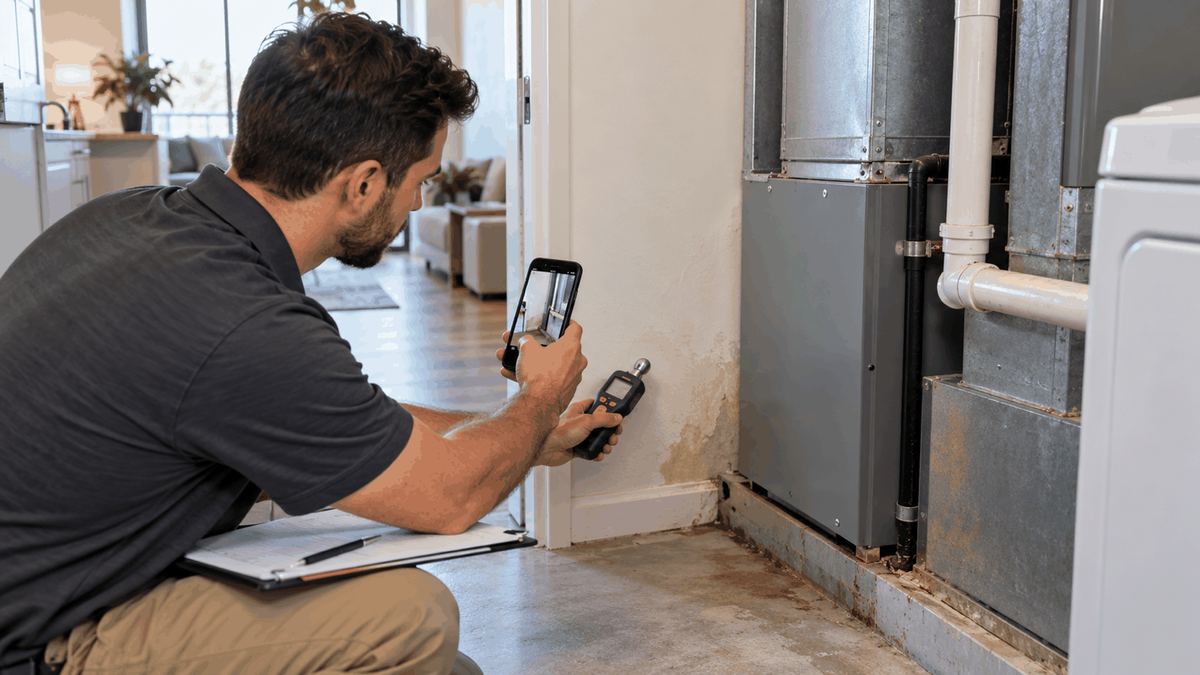
Property teams can respond to tenant mold complaints more consistently by documenting moisture, location, timing, communications, and vendor handoff details. A simple record helps the next person continue the response without guessing.
A tenant complaint about mold can arrive as a text message, maintenance ticket, phone call, photograph, or urgent request at the leasing office. The first response should not be a guess about health effects or a promise about the cause. It should be a calm process for recording what was reported, checking for visible moisture conditions, protecting the area when appropriate, communicating next steps, and deciding when a qualified inspection or remediation vendor is needed. Training helps property teams perform that process consistently across apartments, schools, offices, hotels, and commercial buildings.
This article is about documentation and role clarity, not a substitute for a building assessment, medical advice, or state and local requirements. Rules for disclosure, landlord duties, licensing, sampling, and remediation can vary by jurisdiction. Property managers should check the requirements that apply to the building and use qualified professionals when the condition exceeds the team's role.
Why the First Record Matters
The first record creates the starting point for every later decision. It should capture who reported the concern, when it was received, which room or area is involved, what the person observed, whether there is an active leak or odor, and whether anyone reports symptoms or an urgent safety concern. The record should distinguish a direct observation from a conclusion. “Dark spotting on the lower wall near the window” is more useful than “confirmed toxic mold.”
Timing helps reveal moisture pathways. Ask when the issue began, whether it follows rain, HVAC operation, plumbing use, cleaning, a move-in, or a recent repair. Note whether the area is near a bathroom, kitchen, roof edge, exterior wall, pipe chase, mechanical room, or condensate line. A complaint that appears after a storm may require a different investigation from one that follows a slow plumbing leak or persistent indoor humidity.
Photographs can support a record when they are taken safely and stored with the correct unit, date, and location. Avoid photographing personal information unnecessarily. Keep original files when possible, record who took them, and add a short description. A photo does not establish the full extent or cause of a condition, but it can help the maintenance team, manager, and vendor compare what was reported with what was found.
A Practical Documentation Workflow
Start with intake. Record the resident's words without promising a diagnosis or outcome. Confirm the best contact method and explain the next action, such as a maintenance visit, moisture check, temporary relocation of stored items, or vendor coordination. If the report includes an active water leak, electrical concern, structural damage, or a person who appears seriously ill, follow the property's emergency procedure and appropriate professional guidance.
At the first site visit, observe before disturbing materials. Look for visible water, staining, condensation, damp building materials, peeling finishes, musty odor, damaged sealants, blocked HVAC drainage, plumbing leaks, roof or window intrusion, and elevated humidity. Note the condition of nearby spaces, not just the reported spot. Moisture can travel through assemblies, and a dry surface can remain connected to a concealed source.
If the team uses a moisture meter or humidity instrument, record the device type, location, reading, and conditions. A reading is not a mold test and should not be presented as a diagnosis. Use instruments consistently and follow manufacturer instructions. Record whether the surface is a material for which the instrument is appropriate. When a result is uncertain, document the uncertainty and escalate rather than turning an isolated number into a conclusion.
Temporary controls should be specific. A team may stop a leak, protect contents, improve routine ventilation, place a work order, isolate a damaged area, or move occupants away from a hazardous repair zone according to the property's procedure. Do not disturb extensive visible growth, remove building materials, or apply chemicals beyond the team's training and authorization. The record should state what was done, by whom, when, and what remains open.
Vendor handoff works best as a package. Include the complaint timeline, photographs, moisture observations, affected locations, access information, known repairs, occupancy constraints, and questions the vendor should answer. Identify whether the request is for assessment, moisture-source investigation, remediation planning, or another defined service. The property team should not direct a vendor to produce a predetermined conclusion.
Common Mistakes and Misconceptions
One mistake is treating every dark mark as proof of a specific mold type. Another is treating the absence of visible growth as proof that no moisture problem exists. Mold prevention begins with moisture control, but a property team may need a qualified assessment to understand concealed conditions or the proper scope of work. EPA guidance emphasizes moisture control in building design, construction, and maintenance because preventing or correcting dampness is central to managing indoor environmental conditions.
Do not promise that a quick cleaning resolves the complaint. Do not tell a tenant that an online certificate makes the property team an inspector or remediator. Do not state that EPA, OSHA, or CDC certifies a mold inspector or sets a federal airborne mold threshold. A course certificate of completion shows training participation, not guaranteed third-party licensure. State and local rules may establish requirements that the property must follow.
Avoid incomplete handoffs. A vendor who receives only a photograph may not know when the complaint began, whether a leak was repaired, which areas are affected, or whether occupants need special communication. Avoid collecting irrelevant medical details. Record the operational information needed to respond, and direct health questions to qualified health professionals.
How Training Helps
Mold Prevention and Remediation Awareness Training can help general staff recognize moisture sources, report concerns, protect occupants and contents, and avoid making unsupported claims. It is a sensible foundation for maintenance, leasing, and building teams who need a common response language.
Property Management Mold Training is more directly suited to property managers, leasing teams, maintenance coordinators, and vendor-facing staff who handle tenant complaints, documentation, moisture checks, work orders, and communication. The course can help a team build a repeatable intake and handoff workflow while keeping inspection and remediation boundaries clear.
Mold Inspector Certification Training at moldtraining.us is a different path for people preparing for inspection-oriented work, such as home inspectors, environmental consultants, remediation contractors, and real estate professionals. It is IAC2-aligned training with a certificate of completion, not a federal license or a guarantee that a person meets every state or local requirement. Employers should verify applicable credentials and scope before assigning inspection work.
Training is most useful when paired with a property procedure. Give staff a form or ticket template, define who can authorize a vendor, establish a communication review, and sample closed records during an audit. The goal is a consistent, respectful response that controls moisture and keeps decisions traceable.
Frequently Asked Questions
Should a property manager diagnose mold during the first visit?
No. The first visit should document observations and moisture conditions, follow the property's safety procedure, and determine whether qualified assessment or remediation support is needed. Use descriptive language and avoid claims about species, toxicity, health effects, or the full extent of a condition.
What should be included in a tenant complaint record?
Include the date and source of the report, location, description, timing, photographs when appropriate, visible moisture or damage, instrument readings if used correctly, actions taken, communications, work orders, vendor questions, and unresolved items. Keep the record focused on the response and protect personal information.
Is a moisture meter a mold test?
No. A moisture meter can provide information about a material or area when used appropriately, but it does not identify mold or determine whether remediation is required. Record readings with context and use qualified professionals for questions beyond the team's training.
Does completing mold training make someone a licensed mold inspector?
No. Training provides knowledge and a certificate of completion. Licensure, registration, or other requirements depend on state and local rules. The employer or professional should verify the applicable scope before offering or performing inspection services.
When should a property team involve a vendor?
Involve a qualified vendor when the moisture source is not understood, materials may be concealed or extensively affected, the area exceeds the team's authorized work, occupants require careful coordination, or the property procedure calls for assessment or remediation support. Define the requested service rather than asking for a predetermined result.
Conclusion
A calm, factual record helps a property team respond to a tenant mold complaint without guessing beyond its role. Document the report, investigate moisture safely, control urgent conditions, communicate clearly, and hand a complete package to the right vendor when needed. Property Management Mold Training can help turn those steps into a repeatable workflow while respecting state and local requirements and the limits of online training.