
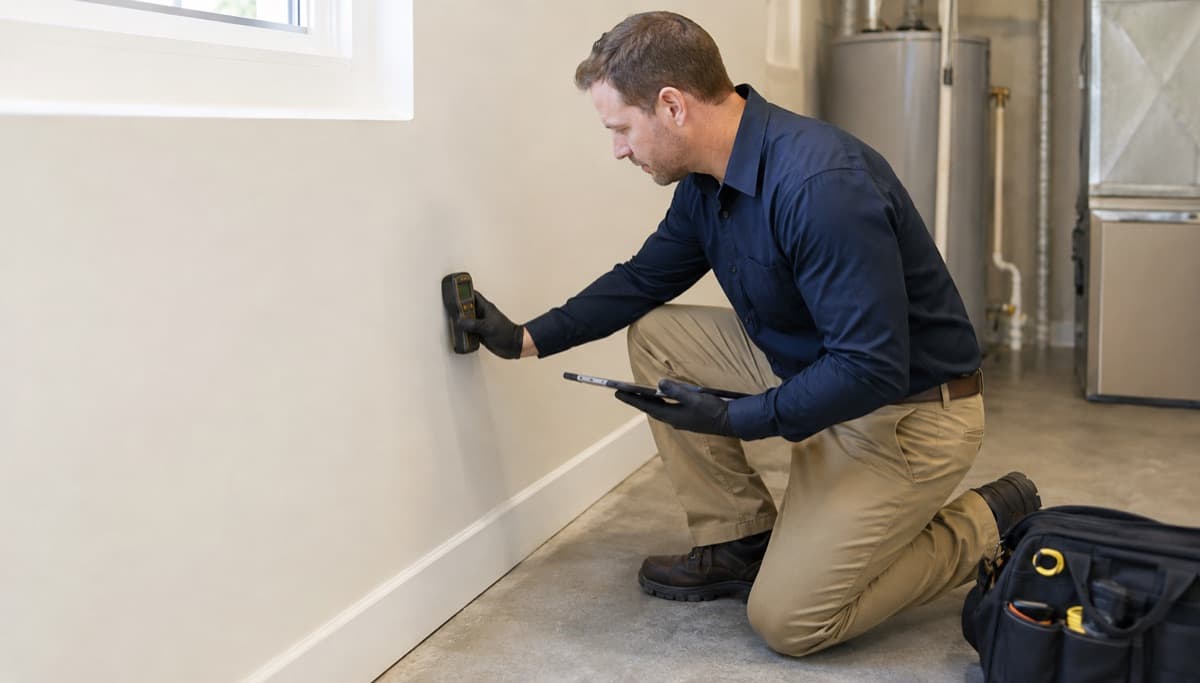
Home inspectors are often the first professionals a buyer, seller, landlord, or property manager calls when a building has a musty odor, a history of leaks, or visible staining that might be mold. That creates a natural business opportunity: adding mold inspection services can make your work more complete and valuable. It also adds responsibility.
A mold inspection is not just a quick visual note or a sample sent to a lab. It requires a practical understanding of moisture, building systems, inspection limits, sampling decisions, documentation, client communication, and the difference between inspection and remediation. Before offering mold services, home inspectors should know what training can and cannot do, what standards are commonly used, and where federal agencies do not provide hard thresholds.
This guide explains what mold inspection training should cover, why it matters for home inspectors, and how moldtraining.us fits into a training plan.
Why Home Inspectors Add Mold Services
Mold concerns often appear during real estate transactions because moisture history affects confidence. A buyer may see staining under a sink. A seller may want to document that a previous leak was addressed. An agent may need a clearer next step after an inspection report mentions water intrusion or a musty odor.
For home inspectors, mold services can be a logical extension of existing skills. You already evaluate roofs, exterior drainage, plumbing, HVAC, crawlspaces, attics, basements, and interior finishes. These are the same areas where moisture problems often start. Mold inspection training helps connect those observations to a specific scope: identifying conditions conducive to mold growth, deciding when sampling may be appropriate, documenting findings, and explaining limits without overstating conclusions.
Adding mold services can also help inspectors serve remediation contractors, property managers, environmental consultants, and employers who need better documentation around moisture complaints.
What Mold Inspection Training Should Cover
Good mold inspection training should begin with the basics: what mold is, why indoor mold growth is usually a moisture problem, and why prevention focuses on water control. EPA mold guidance emphasizes that mold spores are common indoors and outdoors, and that mold becomes a problem indoors when spores land on damp materials and grow. That means an inspector needs to think in terms of water sources, building materials, ventilation, humidity, and time.
Training should also cover how to perform a structured visual inspection. A mold inspection may include roof drainage, exterior grading, plumbing leaks, HVAC condensate issues, attic ventilation, crawlspace conditions, interior water staining, and areas where humidity or moisture readings suggest further evaluation. The point is to recognize visible, readily accessible conditions that are relevant to mold growth and moisture intrusion.
Sampling is another major topic. Many clients assume that every mold inspection requires air testing. That is not accurate. EPA states that if visible mold growth is present, sampling is usually unnecessary. EPA also notes that no federal limits have been set for mold or mold spores in air, so sampling cannot be used to prove compliance with a federal mold standard. This does not mean sampling has no use. It means sampling should be tied to a clear purpose, a sound protocol, and professional interpretation.
A training program for mold inspectors should explain when sampling may help, how indoor and outdoor samples are compared, why conditions during sampling matter, and why lab reports should not be treated as automatic pass/fail documents.
Understanding IAC2 Mold Inspection Standards
Many mold inspectors look to the International Association of Certified Indoor Air Consultants, commonly known as IAC2, because its Mold Inspection Standards of Practice provide a defined inspection framework. The IAC2 standards describe complete and limited mold inspections, including non-invasive visual examination, moisture-related observations, sampling procedures, reporting expectations, and limitations.
For home inspectors, this matters because scope control is essential. A mold inspection is not the same as a standard home inspection, and it is not a comprehensive indoor air quality inspection. The IAC2 framework helps inspectors explain what was inspected, what was not accessible, what conditions were observed, and what sampling did or did not show.
Training aligned with IAC2 concepts can help inspectors build better habits around:
- Defining the inspection scope before work begins.
- Distinguishing complete mold inspections from limited area inspections.
- Observing moisture intrusion, water damage, musty odors, apparent mold growth, and conditions conducive to mold growth.
- Measuring moisture, humidity, and temperature where appropriate.
- Using sampling procedures consistently when sampling is part of the job.
- Writing reports that identify limitations instead of implying certainty where none exists.
Mold Inspection Is Not Mold Remediation
One of the most important boundaries is the difference between inspection and remediation. A mold inspector evaluates conditions, documents observations, may collect samples under an appropriate protocol, and reports findings. A remediation contractor performs cleanup, containment, material removal, drying, and related corrective work.
Those roles can overlap in some businesses, but they should not be confused in client communication. If an inspector identifies apparent mold growth, the next step may involve repair, remediation, further investigation, or consultation with qualified professionals depending on the scope and local requirements.
Inspectors should avoid making medical claims, promising that a building is "mold-free," or using sample results to declare a building safe under a federal airborne mold threshold. EPA and OSHA do not set federal airborne mold concentration limits. A careful report should focus on observed conditions, moisture sources, limitations, recommendations, and when additional professional help may be needed.
Common Mistakes and Misconceptions
The first common mistake is assuming that a short checklist is enough. Mold work requires judgment. Inspectors need to understand why moisture matters, how building systems interact, and how to communicate uncertainty.
The second mistake is overselling sampling. Air samples can be useful in some scenarios, but they are not a universal answer. A visual inspection, moisture readings, occupant information, and building history often provide the most useful direction. If sampling is performed, the inspector should know why each sample was taken and how the results will be interpreted.
The third mistake is using certification language loosely. Some organizations offer professional certifications, memberships, or standards. Training providers may offer certificates of completion. Federal agencies such as EPA, OSHA, and CDC do not certify mold inspectors. A course can document training completion and align with recognized standards, but it should not be described as guaranteed licensure or federal certification.
The fourth mistake is ignoring local rules. Mold licensing, disclosure duties, landlord-tenant obligations, and remediation requirements can vary by state or locality. Inspectors and employers should verify current requirements in the areas where they work.
The fifth mistake is writing reports that are too vague. A stronger report connects observations to locations, moisture indicators, access limitations, photos, sample IDs if applicable, and practical next steps.
What Home Inspectors Should Be Able to Do After Training
After completing a solid mold inspection training course, a home inspector should be better prepared to recognize mold-conducive conditions, explain the role of moisture, use common inspection tools, understand sampling basics, and write clearer reports.
For example, an inspector should know how to discuss a basement wall with elevated moisture readings, a crawlspace with poor drainage, an HVAC condensate leak, staining below a bathroom, or a musty odor with no visible growth. The goal is not to diagnose occupant health conditions or guarantee hidden conditions. The goal is to identify relevant evidence and communicate it responsibly.
This is where online training can be useful for working inspectors. A self-paced course lets inspectors study standards, inspection steps, sampling concepts, and reporting expectations without leaving the field for several days.
How Moldtraining.us Fits the Need
For home inspectors who want inspector-level training, the most relevant option from moldtraining.us is the Mold Inspector Certification Training course. It is a 6-hour, self-paced online course aligned with IAC2 Mold Inspection Standards of Practice. It covers mold biology, inspection tools, sampling procedures, lab-result interpretation, and professional report writing.
Students who pass the final exam receive a certificate of completion. That certificate can help document training for business records, employer files, client confidence, or continuing education planning. It is not an EPA certification, OSHA certification, CDC certification, or a guarantee of third-party professional licensure.
Home inspectors who only need basic awareness for staff may be better served by the 2-hour Mold Prevention and Remediation Awareness Training. Property managers and maintenance teams that handle tenant complaints, documentation, and vendor coordination may prefer the Property Management Mold Training course. For inspectors adding mold services, however, the 6-hour inspector course is the best fit.
FAQ
Do home inspectors need mold inspection training before offering mold services?
Training is strongly recommended because mold inspection involves moisture evaluation, scope control, sampling decisions, report language, and client communication. State or local rules may also apply, so inspectors should verify requirements where they work.
Does EPA certify mold inspectors?
No. EPA provides mold guidance and educational resources, but it does not certify mold inspectors or set federal airborne mold thresholds for compliance decisions.
Is mold sampling always required during a mold inspection?
No. EPA notes that if visible mold growth is present, sampling is usually unnecessary. Sampling may be useful in certain situations, but it should have a clear purpose and be interpreted by someone with appropriate experience.
What is the difference between a mold inspection and a home inspection?
A home inspection evaluates many visible systems and components of a property. A mold inspection focuses on mold-related conditions, moisture intrusion, apparent growth, sampling when included in the scope, and mold-specific reporting limits.
Can a home inspector also perform mold remediation?
Some businesses offer both inspection and remediation, but the roles should be clearly separated. Clients should understand whether the professional is documenting conditions, performing cleanup, or both. Local rules and conflict-of-interest policies may also matter.
Which moldtraining.us course is best for home inspectors?
The Mold Inspector Certification Training course is the most relevant option for home inspectors adding mold inspection services because it is inspector-focused and IAC2-aligned.
Conclusion
Mold services can be a practical addition for home inspectors, but they should be built on more than general building knowledge. Inspectors need a process for evaluating moisture, explaining inspection limits, deciding when sampling is useful, and writing reports that clients can act on.
Mold inspection training helps create that process. For home inspectors, remediation contractors, environmental consultants, and real estate professionals who want a structured introduction to inspector-level mold work, moldtraining.us offers a self-paced Mold Inspector Certification Training course with a certificate of completion and IAC2-aligned content.
Sources
- U.S. Environmental Protection Agency - Mold Course Introduction
- U.S. Environmental Protection Agency - Mold Testing or Sampling
- International Association of Certified Indoor Air Consultants - Mold Inspection Standards of Practice
- Occupational Safety and Health Administration - Mold
- CDC/NIOSH - Mold in the Workplace