
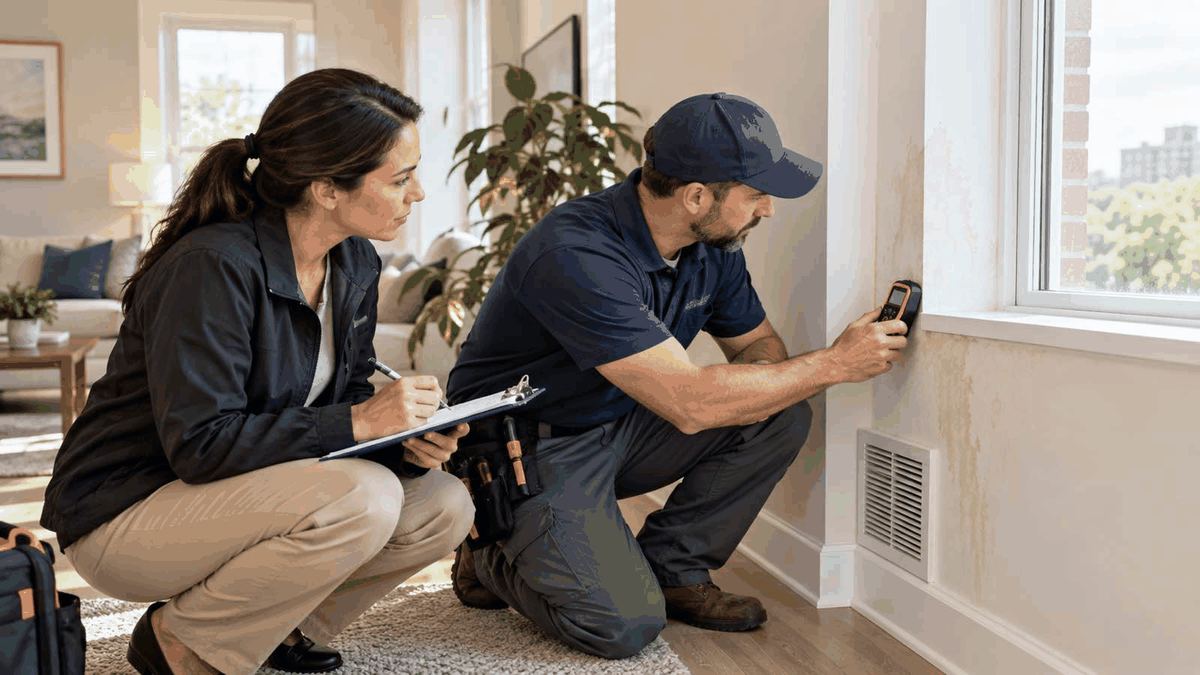
Mold complaint triage training helps property teams document moisture concerns, protect occupants, and choose the right next step before calling a vendor. A consistent first response does not diagnose illness or determine whether a building needs remediation, but it can preserve useful facts, reduce avoidable delays, and help managers coordinate maintenance, inspection, communication, and follow-up.
Property teams often receive a complaint with limited information: a musty odor, a dark spot near a window, a ceiling stain, condensation, or a report that a room feels damp. The first person who receives the call may be a leasing agent, maintenance worker, receptionist, building manager, or supervisor. Training gives that person a practical workflow so the response does not depend entirely on memory or on how urgent the caller sounds.
Why Complaint Triage Matters
Mold growth is connected to moisture. EPA and CDC guidance emphasize finding and correcting the moisture source, while recognizing that people can have different reactions to damp or moldy environments. A complaint should therefore be taken seriously as a building-condition report without promising a health conclusion, identifying a species from color, or implying that a single air sample can answer every question.
The first record can help separate several issues that may be mixed together. There may be an active plumbing leak, a roof or window intrusion, an HVAC condensate problem, high humidity, a past water event, a material stain, or visible growth. The building team may need to address an immediate maintenance condition, arrange a closer inspection, communicate temporary precautions, or coordinate a qualified remediation contractor. The right path depends on what is known and what remains uncertain.
Good triage also protects the relationship with the occupant. A calm response can acknowledge the concern, explain what will happen next, and avoid unsupported assurances. The manager should not dismiss a complaint because the area is small or because the building has no prior history. The manager should also avoid declaring the unit unsafe, estimating health risk, or promising a specific repair outcome before the facts are reviewed.
A Practical Triage Record
The record should begin with the basics: date and time, caller, property, unit or room, contact preference, and the exact location of the concern. Capture the caller’s words as accurately as possible, then separate reported symptoms from observed building conditions. If the caller mentions health concerns, the team can recommend that they speak with a healthcare professional without attempting to provide medical advice.
Ask focused questions that help locate moisture:
- What was seen or smelled, and when was it first noticed?
- Is the area near a window, exterior wall, roof, plumbing fixture, appliance, HVAC component, or foundation?
- Is the surface wet now, or does the issue appear to be from an earlier event?
- Has there been a leak, overflow, condensation, flood, repair, or unusual humidity?
- Is the odor or visible condition spreading, returning, or limited to one material?
- Are there rooms, closets, or mechanical spaces on the other side of the wall or ceiling?
- Has anyone moved furniture, cleaned the area, painted, or removed materials?
Record what the team can verify without disturbing materials unnecessarily. Note visible staining, dampness, peeling paint, warped trim, condensation, musty odor, blocked airflow, damaged ceiling tile, or a malfunctioning dehumidifier. Photographs should show the location and a closer view, with the date and room identifier recorded separately. Do not scrape, cut, or disturb suspect material simply to obtain a better photograph.
The record should identify immediate controls. A maintenance worker may need to shut off a leaking fixture, contain water, protect belongings, move occupants away from a wet area, restrict access, or request an HVAC check. If electrical equipment is wet, the response should follow the employer’s electrical safety procedures and use qualified personnel. If the condition involves sewage, extensive water damage, structural concerns, or a large affected area, escalate through the property’s emergency and vendor process.
Triage should also identify ownership and responsibility. A rental manager may need to coordinate with the property owner, tenant, maintenance contractor, building engineer, insurer, or remediation vendor. A commercial facility may need to involve EHS, facilities, security, and an occupational health process. The record should state who received the complaint, who inspected, who was notified, and what action is still open.
Common Mistakes and Misconceptions
Color is not a reliable way to identify a mold type or determine risk. A property team should not describe a spot as a particular species based on appearance. CDC states that there are no set standards for what is an acceptable quantity of different kinds of mold in a home and does not recommend relying on testing to decide whether someone might become sick. Sampling may have a role in a specific professional investigation, but it is not a substitute for correcting moisture and evaluating visible conditions.
Another mistake is cleaning the surface while leaving the water source unresolved. A wiped wall may look improved while a leak, condensation pattern, or damp cavity continues. The record should pair any cleaning or removal with the question, “What stopped the moisture?”
Do not promise that a tenant, employee, or customer will have no health effects. The team can explain the building response and recommend medical advice for personal health questions. Do not imply that EPA, OSHA, or CDC certifies a mold inspector or sets a universal federal indoor airborne mold threshold. State and local rules, disclosure duties, landlord-tenant requirements, occupational obligations, and professional practices may apply differently.
Avoid sending untrained staff into extensive contamination or demolition. Work involving substantial water damage, hidden growth, contaminated materials, respiratory protection, or occupied sensitive environments may require qualified evaluation and a documented work plan. The property team should follow its hazard assessment, PPE, contractor, and communication procedures.
Finally, do not close the complaint when the vendor is scheduled. Track the appointment, moisture correction, work performed, clearance or post-work documentation when applicable, and the follow-up with the occupant. A closed ticket should show why the team believes the building response is complete, not merely that someone was contacted.
How Training Helps
Mold Prevention & Remediation Awareness Training is a useful baseline for staff who may notice moisture or receive a complaint but do not inspect or remediate mold as their primary duty. It can help general staff, maintenance assistants, leasing teams, and supervisors recognize moisture pathways, report conditions, protect themselves, and follow escalation procedures.
Property Management Mold Training is more directly aligned with complaint triage. It can help property managers, building managers, maintenance leads, and leasing staff organize the intake record, coordinate vendors, communicate carefully, distinguish maintenance from inspection decisions, and track the issue from first report through follow-up. The course provides a certificate of completion and standards-aligned education, not a guaranteed license or a substitute for state or local requirements.
Mold Inspector Certification Training may be relevant for professionals who intend to perform inspection work, such as home inspectors, environmental consultants, and remediation contractors. That path should be evaluated against the person’s scope of practice, employer procedures, client expectations, and applicable state and local requirements. Training alone does not guarantee third-party licensure or authorize a person to make every type of health, legal, or building determination.
Training is most useful when paired with a property workflow. Create one intake form, one escalation chart, one maintenance response checklist, and one follow-up standard. Practice a scenario involving a ceiling stain, a musty closet, an HVAC condensation complaint, and an occupant who reports symptoms. The objective is not to make the team diagnose mold. It is to make the first response accurate, respectful, safe, and connected to the right next professional.
Frequently Asked Questions
Should property staff test for mold during the first visit?
Property staff should document the condition and moisture indicators, then follow the employer’s assessment and vendor process. They should not assume that an improvised sample or consumer kit will answer whether an occupant is at risk. Professional testing, when appropriate, should be selected for a defined purpose and interpreted within the broader building investigation.
What should staff say when an occupant reports symptoms?
Staff can acknowledge the concern, document what was reported, explain the building response, and recommend that the person discuss medical questions with a healthcare professional. Staff should avoid diagnosing the cause, promising that the condition is harmless, or assigning a health outcome based only on a visual observation.
Is a small spot always a minor issue?
Not necessarily. Size is one fact, but the moisture source, material, location, recurrence, hidden conditions, occupant sensitivity, and building use also matter. A small visible area near an active leak may require a faster maintenance response than a larger dry stain from a documented past event.
When should a vendor or specialist be called?
Follow the property’s escalation criteria and local requirements. Escalation is especially important when moisture is extensive or recurring, materials may be hidden or contaminated, the area affects an occupied sensitive environment, structural or electrical hazards are present, or the team lacks the training and equipment to evaluate or correct the condition safely.
Do training certificates make a property compliant?
No. A certificate of completion can document that someone completed a course, but it does not replace a building assessment, employer procedures, vendor qualifications, state or local rules, or a complete response record. The property owner and employer must apply training to the actual condition.
Conclusion
The strongest mold complaint response begins with disciplined documentation: what was reported, what was observed, where moisture may be coming from, what immediate control was taken, who is responsible, and what remains unknown. A trained property team can respond promptly without overpromising, protect occupants and workers, and hand a clear record to maintenance, inspection, or remediation professionals.