
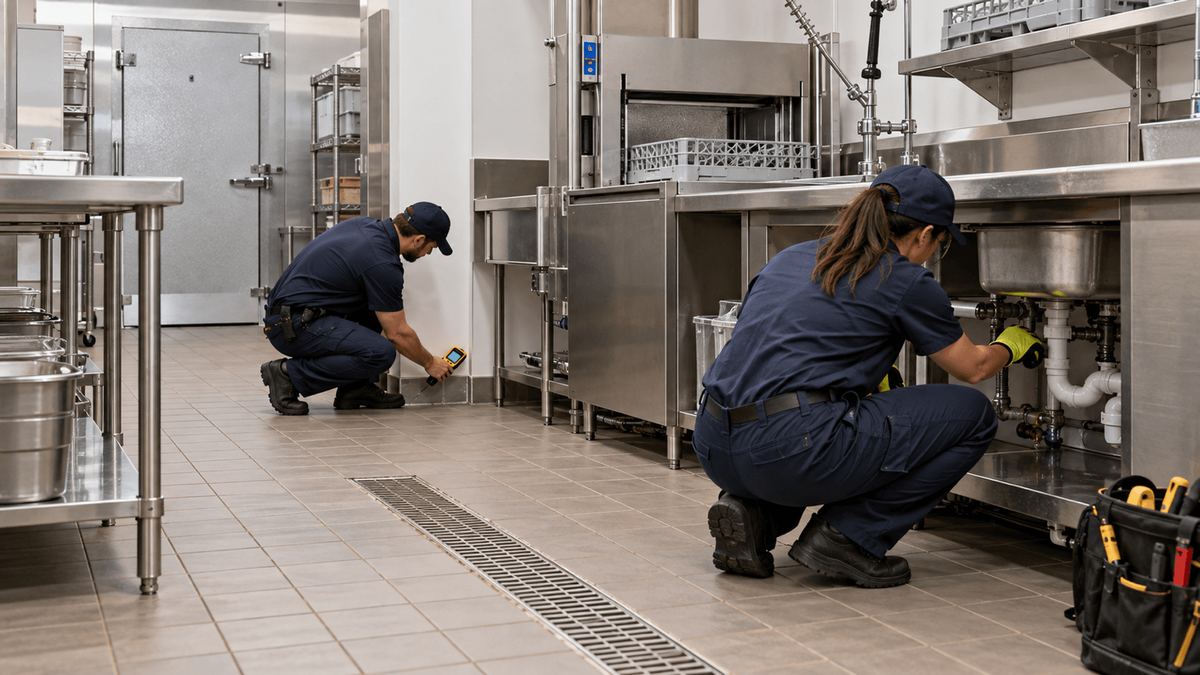
Restaurant kitchens create water, steam, heat, and cleaning moisture daily, so small leaks or drainage problems can affect hidden building materials quickly. The answer is not to treat every damp surface as a mold emergency. Give managers, maintenance staff, and cleaning teams a practical way to identify unusual moisture, document it, correct the source, and escalate conditions that exceed their roles.
Food-service sanitation and building moisture control overlap, but they are not the same program. A clean stainless surface does not reveal what is happening behind a wall, under a sink cabinet, above a suspended ceiling, or around a walk-in cooler. Likewise, finding damp building material does not tell staff to diagnose a health condition or start removing material without appropriate planning.
A restaurant moisture routine should fit the pace of operations. Opening checks, shift handoffs, closing work, deep cleaning, equipment service, and contractor visits all provide opportunities to spot changes. Training helps teams use those moments consistently without disrupting food preparation or assigning technical work to unqualified staff.
Where Restaurant Moisture Problems Start
Dishwashing areas combine water supply lines, drain connections, steam, wet racks, floor drains, and frequent cleaning. A small connection leak may run behind equipment rather than across an open floor. Repeated splash can wet wall bases or penetrations. If floor slope or drain flow is poor, water may remain against grout, wall assemblies, or equipment supports after the visible work area looks dry.
Kitchens have other concealed sources. Ice machines, beverage equipment, sinks, water filters, steamers, kettles, and refrigeration condensate lines may leak slowly. Flexible hoses can wear, fittings can loosen, and drain pans can overflow. Staff may wipe up the same area each day without recognizing that repeat moisture is a maintenance signal.
Walk-in coolers and freezers create condensation risks where warm humid air meets cold surfaces. Damaged door gaskets, doors held open, failed heaters, insulation gaps, or blocked drains can produce water around thresholds and adjacent walls. Moisture near a cooler may come from condensation, cleaning, a plumbing line, roof intrusion, or the refrigeration system. The source should be investigated rather than guessed.
Roof drains, exhaust penetrations, make-up air units, and rooftop equipment can affect spaces that appear unrelated to food preparation. A stain above a storage room or dining area may follow structural members or pipes from another location. Weather can change the pattern. Staff should record when a condition appears, not just where the water becomes visible.
Restrooms, mop sinks, janitor closets, floor sinks, and grease-related plumbing deserve attention too. These areas may be out of sight during busy service. Stored cardboard, paper goods, ceiling tile, drywall, wood, and insulation can hold moisture and support growth when they remain damp. Moving absorbent supplies away from leak-prone surfaces makes inspection easier and can limit damage.
A Practical Moisture Check Routine
Start with zones rather than one long generic checklist. Assign the dish area, cook line, beverage station, refrigeration, storage, restrooms, janitor area, dining room, and building exterior to roles that regularly see them. The person checking a zone should know the normal dry condition and what changes require a maintenance request.
Opening checks can look for overnight leaks, ceiling stains, wet floor edges, standing water, unusual condensation, damaged cooler gaskets, and musty odors. Closing checks can focus on whether cleaning water drains as expected, equipment connections remain dry, floor sinks are clear, and absorbent materials have not been left against damp surfaces. The routine should be brief enough that teams actually perform it.
When staff find moisture, they should record the date, time, location, apparent source, affected materials, approximate area, photos if allowed, and immediate action. The record should distinguish an observation from a conclusion. For example, write that a wall base was damp below a supply line, not that mold is inside the wall unless an appropriate assessment supports that statement.
Immediate actions depend on the condition and the worker's role. Staff may be able to stop a minor source, place the area out of service, protect food and supplies, notify a manager, and start an approved work order. They should not open walls, disturb suspect material, apply chemicals, or continue operating damaged equipment unless the employer's procedure and their training authorize it.
Drying should address both surface water and affected building materials. Mopping a floor may leave water in wall cavities, insulation, base assemblies, or under equipment. Maintenance staff should verify that the source is corrected and that the area returns toward its normal condition. If the extent is unclear, materials remain damp, visible growth is present, or occupants report concerns, escalate to an appropriate building or indoor-environmental professional.
Shift handoffs matter because restaurant conditions change throughout the day. A morning manager may notice a stain, a midday crew may see dripping during equipment use, and a closing worker may find pooled water after cleaning. A shared log connects those observations so the same issue is not treated as three unrelated spills.
Contractor coordination matters. Plumbers, refrigeration technicians, roofers, and equipment installers may see concealed moisture. Work orders should ask contractors to report wet material, damaged seals, blocked drains, or unexpected conditions. After repairs, the restaurant should verify the leak has stopped and surrounding materials are addressed.
Common Mistakes and Misconceptions
One misconception is that a strong cleaner prevents a building moisture problem. Cleaning and sanitation are essential for restaurant operations, but they do not repair a leaking pipe, failed gasket, damaged roof, or wet wall assembly. Source control and drying remain central.
Another mistake is relying only on visible mold. Moisture may be hidden behind equipment, inside cabinets, above ceilings, or under flooring. Repeated odors, staining, swelling, peeling finishes, and recurring dampness can justify further investigation even when growth is not visible.
Teams sometimes assume every dark mark is mold. Food residue, grease, soil, staining, and material wear can look similar. Staff should document what they observe and follow the site's escalation process rather than diagnose by color or appearance.
It is also a mistake to wait for a guest or employee complaint before checking recurring wet areas. Routine observation is more useful when it catches a failing connection or drainage problem early. A work-order trend can reveal repeat issues that individual shifts overlook.
Finally, some employers treat a course certificate as permission to inspect, remediate, or perform regulated work in every state. Training can support awareness and response, but state and local rules may establish separate requirements for mold assessment or remediation. Employers and individuals should verify the requirements that apply where they work.
How Training Helps
Training gives staff a shared definition of a moisture concern and a consistent path from observation to response. General employees can learn to recognize warning signs, protect the area, and notify the right person. Managers can learn to document conditions, assign work, communicate with occupants, and follow up. Maintenance staff can connect common restaurant equipment and building systems to likely moisture pathways.
The Mold Awareness, Prevention & Remediation Training for Property Management Teams course at moldtraining.us is a natural fit for managers and maintenance personnel who coordinate building moisture response. It covers moisture sources, prevention, recognition, documentation, and response concepts that can be adapted to restaurant facilities. General staff who need awareness-level knowledge may find the Mold Prevention & Remediation Awareness Training course more appropriate.
Courses provide certificates of completion. A certificate documents training, but it does not guarantee licensure, authorize work outside a person's role, or replace employer procedures and hands-on instruction. Mold assessment and remediation requirements vary, so learners should review state and local requirements before offering or performing regulated services.
Restaurant-specific instruction should follow the course. Walk the facility, identify shutoffs and reporting contacts, review zones, and practice creating a work order. Show staff which areas must be taken out of service, how to protect food and equipment, and when maintenance or an outside professional takes over.
A soft next step is to compare job roles with the moldtraining.us course descriptions, then pair the selected course with the restaurant's moisture map and response procedure. Training works best when learners can connect general concepts to the pipes, drains, coolers, roof penetrations, and communication channels they use every day.
Frequently Asked Questions
Should restaurant staff test the air whenever they see a damp area?
Not automatically. EPA guidance emphasizes moisture control and notes that mold assessment often relies on visual inspection of areas with moisture problems or water damage. Staff should correct the source, document conditions, and seek appropriate professional input when the extent, material, or occupant concern calls for it. Testing decisions should be made for a clear purpose rather than as a routine response to every spill.
Is there a federal safe mold level for restaurant buildings?
EPA states that there are no established safe levels or federal regulatory standards for mold. Staff should not present an air result or surface color as proof that a building is universally safe. Focus on moisture sources, affected materials, applicable health guidance, and qualified evaluation where needed.
How quickly should a leak be reported?
Report active leaks and recurring moisture promptly under the restaurant's procedure. Fast notification helps protect food, equipment, and building materials and gives maintenance more time to control the source. The exact response depends on the leak, affected area, materials, and operational impact.
Can a maintenance worker remove mold after taking an online course?
Course completion alone does not determine whether a worker is qualified, authorized, or legally permitted to perform remediation. The employer should consider the worker's duties, site hazards, PPE and respiratory-protection requirements, the extent of the condition, and state or local rules. Larger or uncertain conditions may require a qualified outside professional.
What should a restaurant keep in its moisture records?
Useful records include the date and location, observations, photos where appropriate, reported source, affected materials, work-order number, interim controls, repair details, drying or verification notes, responsible people, and follow-up date. Keep health information separate and handle it according to the employer's privacy procedures.
Conclusion
Restaurant moisture control is a building-management routine that should work alongside sanitation, equipment maintenance, and food-safety procedures. Kitchens and dish areas will always use water, but recurring leaks, condensation, blocked drains, and wet building materials should not become normal background conditions.
Train each role to observe, document, protect, report, and follow up. Give managers a clear escalation path and maintenance teams the facility-specific information needed to trace sources. When the extent or required work exceeds the team's role, bring in qualified help and check state and local requirements.
The best program is not the longest checklist. It is a routine that busy teams can use consistently and that turns repeated dampness into a tracked repair instead of another temporary cleanup.
Sources
EPA, Mold Course Introduction - https://www.epa.gov/mold/mold-course-introduction
EPA, Who Can Test or Remediate Mold - https://www.epa.gov/mold/who-can-test-my-home-or-clean-fix-and-remediate-my-home-mold
CDC/NIOSH, Mold in the Workplace - https://www.cdc.gov/niosh/mold/about/
CDC, Reopening Buildings Guidance: Mold - https://www.cdc.gov/control-legionella/php/guidance/building-water-system.html