
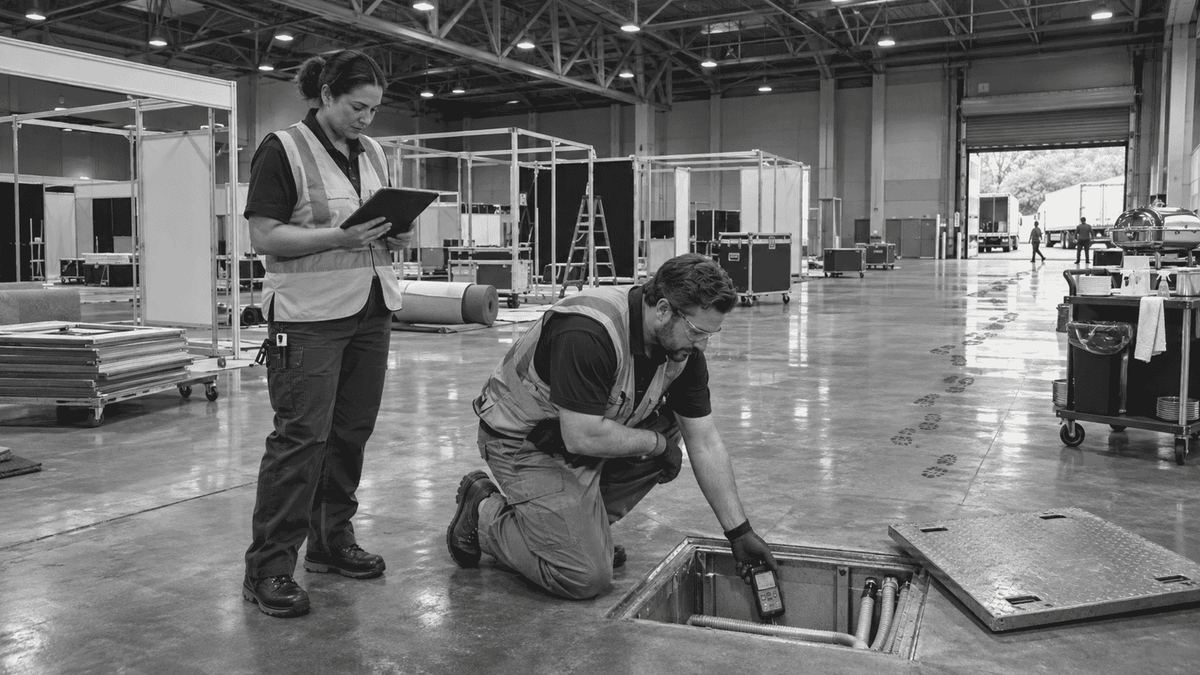
Convention centers can shift from an empty hall to a dense event overnight, so moisture checks must follow temporary uses, quick resets, and changing crews. A roof leak, wet loading path, catering spill, plumbing connection, condensation event, or damp floor box can be hidden by carpet, drape, crates, platforms, and booths before the facilities team sees the full pattern.
The event calendar creates a different moisture challenge from a continuously occupied building. Decorators, exhibitors, caterers, cleaners, audiovisual teams, and dock crews may each control a piece of the hall for a short period. Their handoffs can move faster than the work-order system. Mold prevention therefore depends on a shared routine for noticing water, protecting materials, documenting the source, drying affected areas, and verifying conditions before the next setup covers them.
EPA guidance emphasizes moisture control as the key to mold prevention and recommends drying wet materials promptly, often within 24 to 48 hours. That time frame is practical guidance, not a federal mold threshold or a guarantee that growth will or will not occur. Convention-center teams should apply it with the material, water source, extent, safety conditions, and qualified professional advice in mind.
Why Event Turnovers Create Moisture Blind Spots
Large exhibit halls are designed to change. Temporary carpet can cover damp concrete. Pipe-and-drape can hide an exterior wall. A platform can span a floor box. A booth sink, beverage line, ice machine, aquarium, plant display, or demonstration unit can introduce water into a location that is normally dry. The facility may not learn about the leak until move-out, when the temporary installation is removed.
Dock operations add another pathway. Rain and snow can enter through open doors, wet tires and pallets can cross the floor, and outdoor air can reach conditioned surfaces. If a hall is cooled for a dense event while humid air enters during move-in, condensation may form on cold equipment, piping, diffusers, or floor areas. The response should address the moisture source and building conditions rather than assuming every wet spot came from a spill.
Roof area and height can make source tracing difficult. Water may travel along decking, structure, conduits, or insulation before it appears at a ceiling joint or drips onto an exhibit. A stain on the hall floor may not sit directly below the roof defect. Facilities staff need stable location references such as hall, bay, column line, door, floor box, roof drain zone, and nearby equipment so follow-up teams can return after the event layout disappears.
Rapid resets can erase evidence. Cleaning crews may remove visible water, decorators may roll carpet over the area, and the next exhibitor may receive the space before maintenance confirms that porous materials and concealed areas are dry. A turnover hold point gives facilities staff time to inspect, document, and release an affected zone before it is covered again.
Moisture Checkpoints From Move-In to Move-Out
Before move-in, review recent roof, plumbing, sprinkler, HVAC, and floor-box work orders for the assigned hall. Walk known leak locations, exterior walls, dock thresholds, expansion joints, restrooms, catering support areas, and utility trenches. Confirm that drains are open, floor-box covers seat correctly, and temporary connections will use approved procedures. Baseline photographs can distinguish an old stain from a new event-related condition.
During move-in, give dock and event teams a direct reporting method. A report should identify the hall, location, time, source if known, affected materials, whether water is still entering, and whether electrical, slip, sewage, or structural hazards may be present. Staff should not open energized equipment or disturb suspect materials merely to complete a mold check. The appropriate safety and facilities procedures come first.
During the event, coordinate with housekeeping, catering, security, and event management. They often see condensation, odors, wet carpet edges, recurring spills, ceiling drips, and blocked floor drains before engineering receives a work order. A simple escalation rule helps separate routine cleanup from water that reached wall bases, carpet backing, acoustic materials, crates, insulation, or concealed service spaces.
At move-out, inspect before carpet and temporary flooring are bundled. Look beneath edges and around seams, platforms, refrigeration, sinks, beverage equipment, planters, water features, and floor boxes. Photograph any damp pattern with a location reference. Note the water source classification if known, but do not guess. Water from a clean supply line, roof, sewage backup, or unknown source can require different precautions and response resources.
Drying verification should match the material and event schedule. Concrete can appear dry on the surface while adjacent carpet, wallboard, wood, or insulation remains damp. Moisture meters can support comparisons when used by trained personnel who understand the instrument and material limitations. Readings should be documented with location, material, date, instrument, and a comparison point or project criterion rather than presented as proof that mold is absent.
The handoff is complete when the source is controlled, affected materials are addressed, the area is safe, drying or removal is documented, and responsibility for follow-up is assigned. If the next event will cover the area, the release decision should be explicit. A note such as cleaned after show is not enough to explain what was wet or how the condition was closed.
Common Mistakes and Misconceptions
One mistake is treating polished concrete as the only material at risk. Temporary carpet, pad, drape, wood displays, cardboard crates, wall bases, acoustic panels, insulation, and contents can hold moisture. Another is assuming that a large open hall always dries quickly. Air movement, humidity, temperature, coverings, material layers, and the water source all affect drying.
It is also a mistake to assume that an odor proves mold or that no odor proves the area is clear. Odors can come from drains, adhesives, wet materials, cleaning products, food waste, or HVAC conditions. Visual observations and documented moisture investigation are more useful than assigning a cause from smell alone.
Bleach is not a universal solution for wet or mold-affected materials. Cleaning decisions depend on the material, extent, water source, worker protection, and applicable guidance. Porous materials may need different treatment or replacement. Facilities teams should not create an informal chemical routine that bypasses product labels, safety procedures, or qualified remediation decisions.
Another misconception is that the exhibitor owns every moisture problem inside a booth. The exhibitor may control temporary equipment, while the facility controls the roof, floor box, plumbing supply, HVAC, or building envelope. Contracts and event rules should clarify reporting and response, but the first priority is to stop damage and route the condition to the right party. Delaying action while debating responsibility can expand the affected area.
How Training Helps
Training gives facilities, event services, housekeeping, and maintenance teams a common vocabulary and escalation process. Staff can learn to distinguish observation from diagnosis, recognize moisture indicators, document locations, protect occupants and workers, avoid disturbing unsafe materials, and coordinate drying and follow-up. Scenario practice is especially useful because the same hall may host food service, machinery, livestock, art, temporary plumbing, or thousands of visitors in different weeks.
The Property Management Mold Training course from moldtraining.us is a natural fit for facility managers, building engineers, maintenance staff, event operations leaders, and others who coordinate moisture reports and vendor work. It can provide a foundation in moisture control, documentation, and role boundaries. Facilities should add their own hall maps, event rules, approved instruments, emergency contacts, electrical procedures, work-order fields, and vendor requirements.
The course provides a certificate of completion after the final exam. That certificate does not guarantee licensure or replace an employer's site-specific qualification process. Mold inspection, assessment, sampling, and remediation requirements can vary by state and locality, so participants should review the rules that apply where they work.
If the current turnover process relies on verbal handoffs, consider a small pilot before the next complex event. Train the supervisors and dispatch staff first, test a moisture-report form in one hall, and review whether facilities can locate, investigate, and close each report. Teams interested in a broader rollout can compare the Property Management Mold Training course with awareness-level options and choose instruction that matches each role.
Frequently Asked Questions
Should every spill in an exhibit hall become a mold work order?
Not necessarily. Many small spills can be handled through the facility's approved cleaning process. Escalation is appropriate when water reaches porous or concealed materials, the source continues, the extent is uncertain, drying cannot be confirmed, the water may be contaminated, or the condition recurs. The facility should define those triggers so staff do not rely on personal judgment alone.
Can temporary carpet be rolled up as soon as the top feels dry?
The top surface does not show the condition of the backing, pad, floor, seams, or nearby materials. Inspect the layers and follow the facility's drying and handling procedure before rolling or storing them. Damp materials bundled for storage can create a new moisture problem away from the original location.
Do convention centers need a federal mold clearance number?
There is no general federal indoor mold threshold that makes every building acceptable or unacceptable. Project decisions may use professional scopes, material comparisons, visual findings, moisture goals, or state and local requirements. Facilities should avoid inventing a universal number and should document the criteria actually used.
Who should inspect a wet floor utility box?
Only personnel authorized and qualified for the hazards should open or inspect utility equipment. Water near electrical components requires the facility's electrical safety process. Event staff can report the exact location, keep others away, and contact facilities without reaching into the box or moving energized equipment.
When should an outside professional be called?
Consider qualified help when the water source is contaminated or unknown, the affected area is extensive, materials cannot be dried promptly, hidden damage is suspected, occupants report health concerns, specialized containment or PPE may be needed, or state and local rules require licensed services. The facility's plan should list approved contacts before an event is underway.
Does mold training certify a convention center as mold-free?
No. Training supports staff knowledge and provides individual certificates of completion for completed courses. It does not certify a building, guarantee that mold will not occur, or replace inspection, repair, remediation, or regulatory requirements. Prevention still depends on building maintenance and timely response.
Conclusion
Convention-center mold prevention is a handoff discipline. Facilities teams should track moisture from move-in through move-out, inspect before temporary coverings hide evidence, control the source, document drying or material decisions, and assign follow-up before the next event resets the hall. Role-based training can make that routine easier to recognize and repeat without promising a result that only field verification can support.
Sources
U.S. Environmental Protection Agency, Mold Course Chapter 9: Prevention | https://www.epa.gov/mold/mold-course-chapter-9
U.S. Environmental Protection Agency, Mold Remediation in Schools and Commercial Buildings Guide | https://www.epa.gov/mold/mold-remediation-schools-and-commercial-buildings-guide
moldtraining.us, Property Management Mold Training | https://moldtraining.us/mold-training-for-property-management/
moldtraining.us, State Mold Training Requirements | https://moldtraining.us/state-mold-training-requirements/